
what do anpr cameras do
What Do ANPR Cameras Do: UK 2026
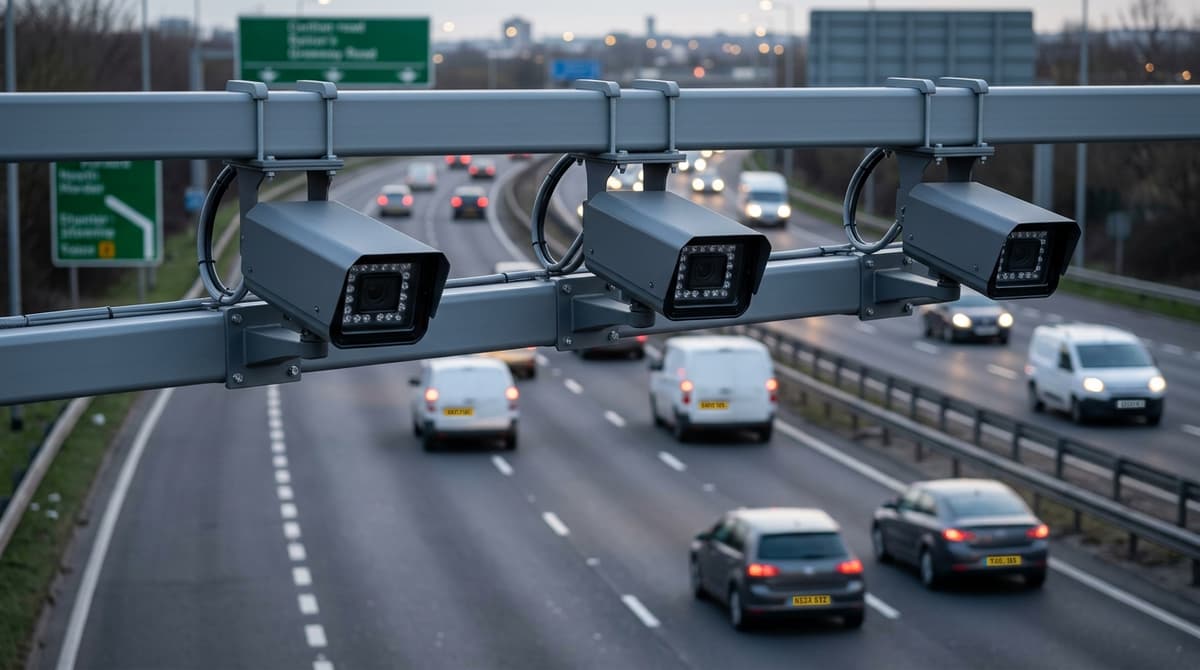
An ANPR camera reads a vehicle's number plate and converts it into text within a fraction of a second, then checks that text against a stored list or external…
On this page
- How does an ANPR camera actually work?
- What can ANPR cameras actually detect and check?
- What are ANPR cameras used for in a business or commercial setting?
- Parking enforcement
- Access control on gated sites
- Fleet and delivery tracking
- What are a UK business's legal duties when running ANPR?
- Car parks: a separate layer of rules
- How is ANPR different from a standard CCTV camera doing the same job?
An ANPR camera reads a vehicle's number plate and converts it into text within a fraction of a second, then checks that text against a stored list or external database to decide what happens next — flag it, log it, or trigger a barrier. That's the core function.
The distinction isn't that ordinary CCTV is physically incapable of this — it's a question of configuration. A general-purpose camera records video for someone to review later; an ANPR camera (or a CCTV camera specifically set up with ANPR software) is configured to extract plate text on the fly and act on it immediately, without a person watching the feed. RAC confirms the underlying optical character recognition can run across ordinary CCTV, traffic enforcement cameras, or ANPR-specific hardware — the software and the database link are what turn a camera into an ANPR system, not the lens itself.
What a given installation can actually do with that plate read depends on what it's connected to. A council or police system checks against national databases to flag stolen or uninsured vehicles, as Police.uk sets out. A private car park system typically only holds its own list of permitted or previously-seen plates, so it can log a return visit or trigger a barrier — but it has no route into DVLA or police records unless a separate contract gives it that access. Anyone specifying a commercial ANPR camera should check whether the plate-reading is happening on the camera itself (edge ANPR) or whether raw footage is sent to an NVR for software elsewhere to process — that affects both what the camera needs to see clearly and how the rest of the system is wired.
How does an ANPR camera actually work?
An ANPR camera captures a number plate image, then software uses optical character recognition to convert it to text and matches that text against a stored list or external database in real time.
An ANPR camera works in two stages: it captures an image of the number plate, then software reads that image and matches the text against a stored list or an external database. This process — image capture, optical character recognition (OCR), and database comparison — is described consistently by Wikipedia's ANPR overview and by RAC Drive.
Stage one is capture. The camera is positioned and focused specifically to resolve a number plate rather than a general scene, and many ANPR cameras use infrared illumination so the plate stays readable after dark or in poor light, a point RAC Drive makes explicitly. This answers a common CCTV questions answered: yes, ANPR is designed to keep working at night, because the illumination and exposure settings are tuned for plate contrast rather than for producing a naturally lit colour image.
Stage two is recognition and matching. Software converts the captured plate image into machine-encoded text using OCR, then that text string is checked — either against a locally stored list (as on a private site or car park) or against an external database, which is how police use of ANPR checks a plate against records of vehicles of interest, per Police.uk.
This two-stage design is exactly why a dedicated ANPR camera differs from an ordinary CCTV camera simply pointed at a car park entrance. A general CCTV camera is optimised for a wide field of view and overall scene detail, so a plate within that frame is often too small, too dark, or too motion-blurred for OCR software to read reliably.
A camera built for ANPR sacrifices wide-scene context deliberately, using a narrower field of view, controlled exposure and (typically) infrared illumination purely to make the plate itself legible — which is the underlying reason installers specify separate ANPR and general-surveillance cameras rather than expecting one camera to do both jobs well.
What can ANPR cameras actually detect and check?
At camera level, ANPR reads and logs three things only: a vehicle's registration number, plus the date, time and location of that read. What happens next — whether that plate triggers an alert, gets waved through, or simply sits in a database — depends entirely on which list or system the reader is connected to.
That distinction matters more than the OCR itself: the camera is just an optical character recognition engine turning a plate image into text, and it's the software behind it that decides whether the read means anything.
Business and private ANPR systems check plates against a list the site owner controls — a car park's list of pay-and-display tickets, a gated estate's permit register, or a haulage firm's own fleet database. A retail car park camera flags overstays by timing entry against exit; a barrier system unlocks only for plates on an approved list; neither has any link to national police or DVLA data. This is the level most commercially available ANPR cameras operate at, and it's the level Clear Security supplies equipment for.
Police ANPR checks the same raw plate read against national databases the moment it happens — records covering stolen vehicles, insurance and vehicle tax status, and wanted or missing persons, according to Police.uk. Police.uk states that officers can then stop a vehicle, speak to occupants, and make an arrest where necessary, and that all reads — not just hits — are logged, with force-level ANPR data retained for one year and most staff access limited to a 90-day window from collection.
So do ANPR cameras check MOT? Not at business or car-park level — MOT, tax and insurance verification runs through DVSA/DVLA-linked national systems queried by police and enforcement bodies, not something a privately owned ANPR camera can reach on its own regardless of brand or price. A car park operator's camera can tell you a plate arrived at 14:02 and left at 16:47; it cannot tell you whether that car has a valid MOT.
A buyer choosing between a standalone edge ANPR camera and a separate NVR doing the plate-matching should be clear which one is making the decision: some cameras handle the read and the list-check on-device, while others simply pass a clean plate image to recording software that does the matching — worth confirming on the datasheet before assuming a camera's "ANPR" label covers both.
| Check type | Who runs it | What it queries |
|---|---|---|
| Site/permit check | Business, car park, fleet owner | Own list of permitted or paid plates |
| Overstay/duration | Car park operator | Entry and exit timestamps only |
| Stolen vehicle, tax, insurance, wanted/missing persons | Police | National DVLA/DVSA-linked databases |
What are ANPR cameras used for in a business or commercial setting?
In commercial use, ANPR cameras solve three practical problems: parking and access control, site security enforcement, and fleet or delivery tracking — all working on the same read-and-match principle against a different list each time.
Parking enforcement
For private car park operators, ANPR handles automatic entry and exit timing, ticketless payment, and flagging vehicles without a valid permit, as RAC Drive describes for car park management use. A camera at the entrance reads the plate on arrival, a second at the exit reads it again, and the system calculates the stay length automatically — no ticket machine or barrier fob needed for a registered account.
The operational catch worth knowing: a vehicle that leaves and re-enters the same car park more than once in a day can be misread by the system as one continuous stay, overcharging the driver unless staff or the software account for it. Anyone running or specifying a car park system should check how the chosen platform handles repeat same-day visits before relying on it for automatic charging.
Access control on gated sites
On a gated commercial or industrial site, ANPR can trigger the barrier automatically for any vehicle on an approved list — staff, contractors, scheduled deliveries — replacing a fob, keypad or intercom call for routine traffic. This is a distinct use case from general CCTV recording: the camera isn't just capturing footage for later review, it's making a real-time access decision the moment a plate is read and matched.
Visitors or vehicles not on the list simply don't get automatic release, which keeps a log of every attempt without needing a person on the gate for each one.
Fleet and delivery tracking
The same principle extends to tracking a business's own fleet or expected deliveries against a known vehicle list, logging arrival and departure times at a depot or loading bay automatically rather than by manual sign-in. Each of these three uses relies on the same underlying read against a database, just with a different list behind it — permit holders, an approved-access list, or a company's own registration numbers.
What are a UK business's legal duties when running ANPR?
A UK business running ANPR must act as a data controller under UK GDPR, providing clear signage, documenting a lawful basis, setting and justifying a retention period, and defining the system's purpose before going live.
A UK business running ANPR takes on data controller duties under UK GDPR the moment its cameras capture identifiable vehicle and driver data — that means clear signage, a documented lawful basis, a defined retention limit and a stated purpose for the system. This is the single biggest legal difference between "installing a camera" and "running an ANPR system" that many buyers overlook.
The scale is different from policing, but the principle is the same. Police.uk confirms that national police ANPR data is held for one year, with most staff access limited to a maximum of 90 days from collection, all under the National ANPR Standards.
A business has no equivalent national rule handed to it — there's no default one-year period to fall back on, so the retention period has to be set and justified by the business itself, proportionate to why the data is being kept (parking enforcement, site security, or investigating a specific incident).
That documented purpose matters as much as the retention figure. A business can't simply keep ANPR reads "in case they're useful" — the lawful basis and purpose need recording before the system goes live, not after an incident forces the question.
Car parks: a separate layer of rules
Private car parks sit under an additional, non-statutory framework. RAC Drive notes ANPR's role in car park management, and operators using it for enforcement typically work within the British Parking Association's Code of Practice — a self-regulatory scheme distinct from, and additional to, the UK GDPR obligations every ANPR operator carries regardless of sector.
For most commercial sites, the practical starting point is the ICO's CCTV guidance on signage and proportionate retention, applied to whatever camera and storage setup is chosen — something worth working through before selecting hardware at Clear Security.
How is ANPR different from a standard CCTV camera doing the same job?
An ANPR camera is configured to extract and match plate text automatically; a standard CCTV camera simply records the scene for a person to review later, with no built-in recognition step.
That distinction — plain video versus video processed for plate text — is the core of what separates the two, even when both are mounted on the same pole. It isn't that CCTV categorically can't ever produce a plate read; it's that the recognition step has to be deliberately configured, either in the camera itself or in software downstream, rather than being inherent to the recording.
A general CCTV camera captures a scene; on its own it does nothing with a number plate. If you want to know which vehicles passed a gate at 3am, someone has to scrub through hours of footage frame by frame. The camera's job ends at storage — interpretation is a human task, done after the event, unless the footage is later run through separate recognition software.
An ANPR camera (or an ANPR-configured system) is built to read and match as vehicles pass, not after the fact. As Police.uk explains, a vehicle's registration is read and instantly checked against database records of vehicles of interest as it passes — the read-and-match cycle runs without an operator watching a screen. RAC Drive describes the underlying process — optical character recognition converting the plate image into machine-encoded text — as usable across ordinary CCTV, traffic enforcement cameras or dedicated ANPR hardware, provided the capture conditions suit OCR; that's a meaningful caveat, since a general CCTV camera aimed at a gate at an oblique angle, or without enough light on the plate, may never produce a clean enough image for OCR to work reliably.
For a buyer, three things matter more than the police-vs-CCTV label. First, what the camera itself can read — a dedicated ANPR unit is built around getting a clean plate image, where a general CCTV camera is optimised for a wider scene. Second, what records a given operator's system is actually allowed and able to query — a police force checks against national databases; a private site owner's system typically only knows the plates that operator has chosen to list. Third, what action the system takes on a match — anything from opening a barrier to simply logging the read for later review, and that's a software and configuration decision as much as a hardware one.
That's the practical difference for a site owner: a CCTV camera answers "what happened here?" after you ask it; a system configured for ANPR is already asking "is this plate one we care about?" on every pass. Choosing between them is really a choice between general-purpose evidence gathering and an automated, list-driven alert — and the datasheet of whichever camera you're considering should tell you which job it's actually built to do.
Frequently asked questions
What do ANPR cameras do?
ANPR cameras automatically capture an image of a vehicle's number plate, use optical character recognition (OCR) to convert that image into text, then check the text against a stored list or external database in real time. That's the distinction from a plain CCTV camera recording footage for someone to review later: an ANPR system is configured specifically to extract and match registration text, and what it can then do with that match depends on who is operating it.
How do ANPR cameras work?
Capture usually relies on infrared illumination so plates read clearly day and night, per the RAC, followed by OCR conversion of the plate image into text and a comparison against whatever list or database that particular operator holds. A council car park camera and a police-network camera both do the OCR step; what differs is the database behind it and the action that follows a match.
What shows up on an ANPR camera?
An ANPR camera's core output is the plate's registration text, plus a timestamped image of the vehicle. Police systems then check that read against records for stolen vehicles, no insurance, or other flags, per police.uk, while a private site's camera may only compare it against a permitted-vehicle or dwell-time list.
Do ANPR cameras check every vehicle?
Fixed ANPR cameras are designed to read every plate that passes within their capture zone, converting each one to text for matching. Accuracy can be affected by poor lighting, a dirty or damaged plate, or a steep viewing angle, so a system's placement and lens choice matter as much as the software behind it.
Can an ANPR camera catch you speeding?
Standard ANPR cameras identify and log plates against databases; they aren't built to measure speed directly. Speed enforcement typically relies on separate or combined camera systems, so ANPR's primary function here is identification rather than speed detection.
Sources & references
- Automatic Number Plate Recognition (ANPR) | Police.uk
- What is ANPR and how does it work? | RAC Drive
- What are ANPR Cameras? How do ANPR Cameras work?
- Automatic number-plate recognition
- ANPR Camera FAQ | MAV Systems Ltd, UK
- Automatic number plate recognition (ANPR) | College of Policing
- Automatic number-plate recognition
Shop this topic
- what
- do
- anpr
- cameras
Written by
Clear Security Editorial Team
Buying guides researched against the equipment we stock, with every specification checked back to the manufacturer's datasheet and UK guidance reviewed before publication.
Related reading
- CCTV Lens Size for Face Recognition at 10 Metres (2026)what lens size cctv camera do i need to see a face at 10 metres
- 4MP vs 8MP CCTV Cameras: What the Difference Means in 2026what does 4mp vs 8mp mean for cctv cameras
- Best CCTV System 2026: How to Choose for UK Homes and Shopswhat cctv system is the best
- What Is a Camera Bracket? UK CCTV Guide 2026what is a camera bracket?
- Best Business CCTV Cameras UK 2026: Types & Specsbest business cctv cameras
- GDPR and CCTV Cameras: UK Buyer's Guide for 2026gdpr cctv cameras